11th November 2025
EU STIP recognises practical and realistic methane decarbonisation pathway
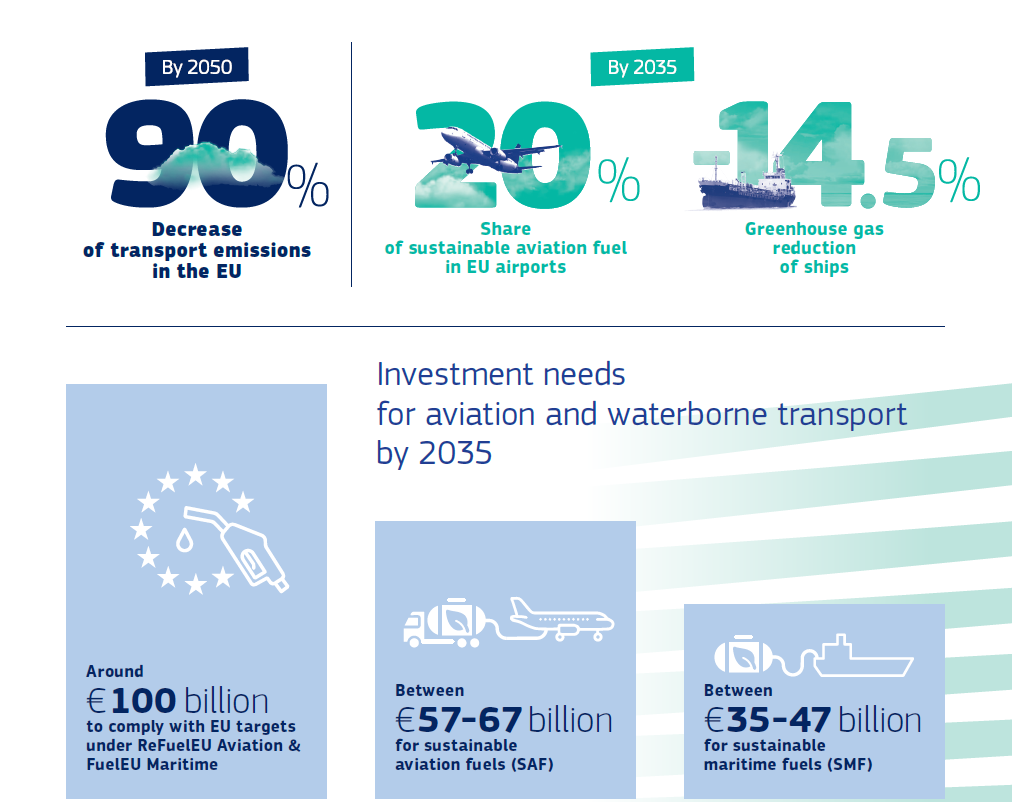
The EU Commission’s new Sustainable Transport Investment Plan (STIP), published on 5th November, represents a major milestone for the methane decarbonisation pathway. The Plan explicitly recognises LNG, bio-methane and e-methane within the clean-fuel mix, noting that ‘LNG, with effective methane-slip mitigation technologies, can also reduce GHG emissions,’ and the trend of ‘ocean-going ships moving towards methane (LNG, bio-methane and in future e-methane).’
In clearly recognising the methane decarbonisation pathway, the STIP reflects long-standing calls for fuel and technology neutrality, ensuring methane, biomethane and e-methane compete on equal terms with other clean fuels.
The STIP also aligns with maritime market realities and recognises the importance of infrastructure continuity. Over 70% of alternative-fuel vessel tonnage ordered in 2025 is methane-fuelled (according to DNV data). This is proof that the market is already focused on solutions that are delivering practical, realistic decarbonisation – starting today.
Importantly, the Plan highlights positive steps towards a more integrated fungible market for bio-methane. It urges Member States to avoid barriers to methane use and harmonise biomethane eligibility. This supports SEA-LNG’s vision for a single, cross-border EU market for renewable methane.
Steve Esau, Chief Operating Officer, SEA-LNG noted: “Policymakers increasingly recognise the need to balance competitiveness with sustainability and to focus on proven practical and realistic solutions that deliver towards decarbonisation today. While there remain areas where further clarification is needed – particularly around investment, funding eligibility, and the practical implementation of neutrality – this moment clearly validates investments in the methane decarbonisation pathway.”
Mark Watts, SEA-LNG’s European Public Affairs Director added: “In terms of next steps, investment and infrastructure clarity are key. SEA-LNG calls for clear funding and eligibility frameworks for methane-based fuels and continued recognition of existing LNG infrastructure as the backbone for scaling renewable methane. The STIP is a constructive step forward – a strong foundation for Europe’s technology-neutral, market-driven maritime transition. The direction is clear, the technology is ready, the investment is happening – and waiting is not a plan.”